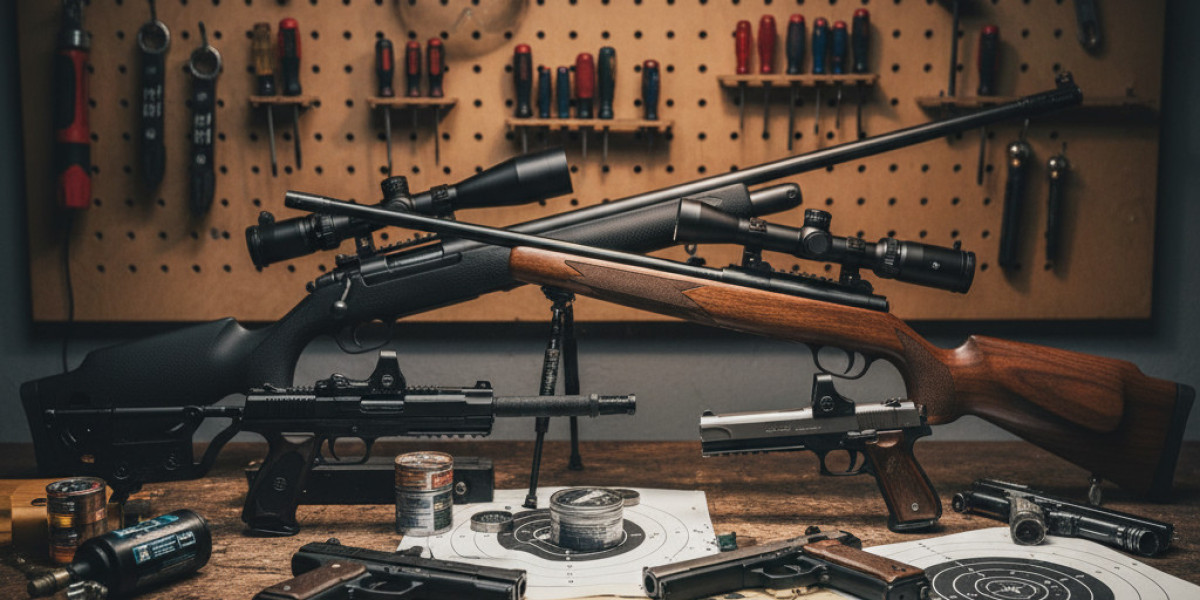

Personal security has evolved into a multi-layered strategy. In 2026, the modern approach to safety often involves tools that bridge the gap between passive deterrents and lethal force. Two of the most discussed options in this category are blank-firing replicas and high-powered airguns. While both are technically non-lethal (or "less-lethal") instruments, they serve vastly different roles in a defensive scenario.
Whether you are looking to secure your perimeter or find a reliable tool for everyday carry, understanding the mechanics, legalities, and strategic application of blank guns for self defence and an air gun is crucial. This guide provides a comprehensive look at how these tools function and how to choose the right one for your safety needs.
Blank Guns for Self Defence: The Power of Deterrence
A blank gun is a non-lethal firearm replica designed to fire blank cartridges. These cartridges contain gunpowder and a primer but lack a projectile (bullet). When fired, they produce the same muzzle flash and deafening report as a real firearm.
1. The Psychological Edge
The primary purpose of blank guns for self defence is psychological deterrence. In a high-stress confrontation, the sight and sound of a firearm are often enough to stop an aggressor in their tracks. Criminals are generally looking for easy targets; a loud, realistic response signals that the target is prepared to fight back.
2. Pepper and Gas Deployment
Many modern blank-firing pistols are compatible with pepper or teargas cartridges. Unlike a standard blank, these cartridges release a cloud of chemical irritant (PA or CS gas) from the muzzle. This adds a physical layer of defense, as the irritant can incapacitate an attacker by causing temporary blindness, respiratory distress, and intense burning sensations, providing the victim a window of time to escape.
3. Legal Simplicity
In many jurisdictions, including South Africa, blank guns are not classified as firearms under the Firearms Control Act because they are incapable of firing a projectile. This means they can often be purchased without a license, making them an accessible option for individuals who do not wish to undergo the lengthy process of firearm licensing but still want a formidable defensive tool.
+1
Air Guns and Pellet Rifles: Precision and Protection
While blank guns focus on sound and gas, an air gun (specifically high-powered pellet rifles) relies on the physical impact of a projectile. Modern airgun technology has advanced to the point where "Pre-Charged Pneumatic" (PCP) systems can deliver energy levels that were once thought impossible for air-powered weapons.
1. Perimeter Security and Home Defense
A high-velocity air gun—particularly those in larger calibers like .22 or .25—is an excellent tool for perimeter security. While not traditionally carried for personal defense on one's person due to their size, a pellet rifle is highly effective for deterring intruders from a distance. The precision offered by rifled barrels allows a homeowner to engage a threat accurately, which is a significant advantage over the short-range nature of pepper spray or blank guns.
2. Multi-Role Versatility
Beyond defense, a quality pellet rifle is a multi-role investment. It can be used for:
Target Practice: Enhancing marksmanship skills at a fraction of the cost of real ammunition.
Pest Control: Managing invasive species or vermin on a property.
Sporting: Participating in competitive field target events.
3. Stealth and Suppressibility
One of the distinct advantages of airguns over blank guns is the noise level. While blank guns are intentionally loud, many air rifles can be fitted with silencers or moderators. In a home defense situation, being able to defend your property without alerting the entire neighborhood or suffering from "indoor ear ring" can be a tactical advantage.
Comparative Analysis: Blank Gun vs. Air Gun
Choosing the right tool depends on your specific environment and your willingness to use physical force.
Feature | Blank Gun | Air Gun / Pellet Rifle |
Primary Mechanism | Sound, Flash, & Irritant Gas | Projectile Impact (Pellet/Slug) |
Effective Range | 1–5 Meters (Gas) | 10–50+ Meters |
Legal Classification | Non-Firearm (Usually) | Non-Firearm (below 5.6mm) |
Skill Requirement | Low (Point and pull) | Medium to High (Marksmanship) |
Deterrence Level | High (Visual/Audible) | Moderate (Visual) |
Physical Impact | None (unless gas is used) | High (Kinetic Energy) |
Practical Tips for Responsible Ownership
Regardless of the tool you choose, ownership comes with a heavy set of responsibilities.
Training and Muscle Memory
In a self-defense situation, your fine motor skills will degrade. You must practice drawing your blank gun or shouldering your pellet rifle until the action is automatic. For blank guns, practice clearing malfunctions (jams), as gas cartridges can sometimes be less reliable than standard blanks.
Safe Storage
Just because these tools are "non-lethal" does not mean they are toys. A pellet rifle can cause severe injury or death if handled improperly. Blank guns, if fired too close to a person's face or ears, can cause permanent hearing loss or burns from the muzzle blast. Always store your equipment in a locked case or safe, away from children and unauthorized users.
Knowing the Law in 2026
In South Africa, the law regarding "imitation firearms" is strict. While you may not need a license to own a blank gun, using it to commit a crime or pointing it at someone without a valid "good reason" (self-defense) is treated with the same severity as using a real firearm. Furthermore, airguns with a caliber larger than 5.6mm (.22) may require a license if they exceed certain power thresholds.
+1
Conclusion
The choice between blank guns and air guns boils down to your defensive philosophy. If your goal is to scare off an intruder and create a chemical barrier without causing permanent physical harm, a blank gun is a powerful ally. If you require a tool for property protection that offers precision, range, and physical stopping power, a high-quality pellet rifle is the superior choice.
By understanding the strengths of each, you can build a comprehensive safety plan that keeps you and your family secure.
Frequently Asked Questions (FAQ)
1. Is it legal to carry a blank gun in public in South Africa?
While blank guns are generally not classified as firearms, carrying one openly in public is highly discouraged and can lead to criminal charges for "causing a public disturbance" or "intimidation." If you carry one for defense, it should be concealed. If the police stop you, they will treat the object as a real firearm until they can verify otherwise, so transparency and cooperation are essential.
2. Can a pellet gun actually stop an intruder?
Yes, a high-powered pellet rifle (especially in .22 caliber) has significant kinetic energy. While it may not have the "one-shot stop" capability of a powder-burning firearm, the pain and injury caused by a well-placed pellet are usually enough to deter any rational attacker. However, it should be viewed as a tool for deterrence rather than a replacement for a handgun in life-threatening situations.
3. Do blank guns require cleaning?
Yes, and even more frequently than real guns. The gunpowder used in blanks is often "dirtier" than standard ammunition, leaving behind significant residue. If you use pepper or gas cartridges, the chemical residue can corrode the barrel and internal mechanisms if not cleaned promptly after use.
4. What is the maximum range of a defensive air rifle?
For defensive purposes, accuracy is more important than distance. A high-quality PCP or spring-piston rifle is most effective within 20 to 30 meters. While they can shoot much further, the drop in velocity and the effect of wind make them less reliable for stopping a threat at extreme ranges.
5. Can I use a blank gun to train for a real firearm?
Absolutely. Blank guns are excellent for practicing "holster draws" and getting used to the noise and recoil-less "pop" of a discharge. They are a cost-effective way to build the muscle memory required for handling a real semi-automatic pistol.
6. Are there age restrictions on purchasing these items?
In most regions, you must be 18 years or older to purchase a blank gun or an air rifle. Even though they are non-lethal, sellers are required to ensure the buyer is of legal age to take responsibility for the device.