
Industrial chemical processes often depend on precise control of concentration, temperature, purity, and reaction conditions. Nitric acid is one such chemical where even a change in concentration can influence its behavior and suitability for a particular process. This becomes especially important when industries work with highly concentrated grades.
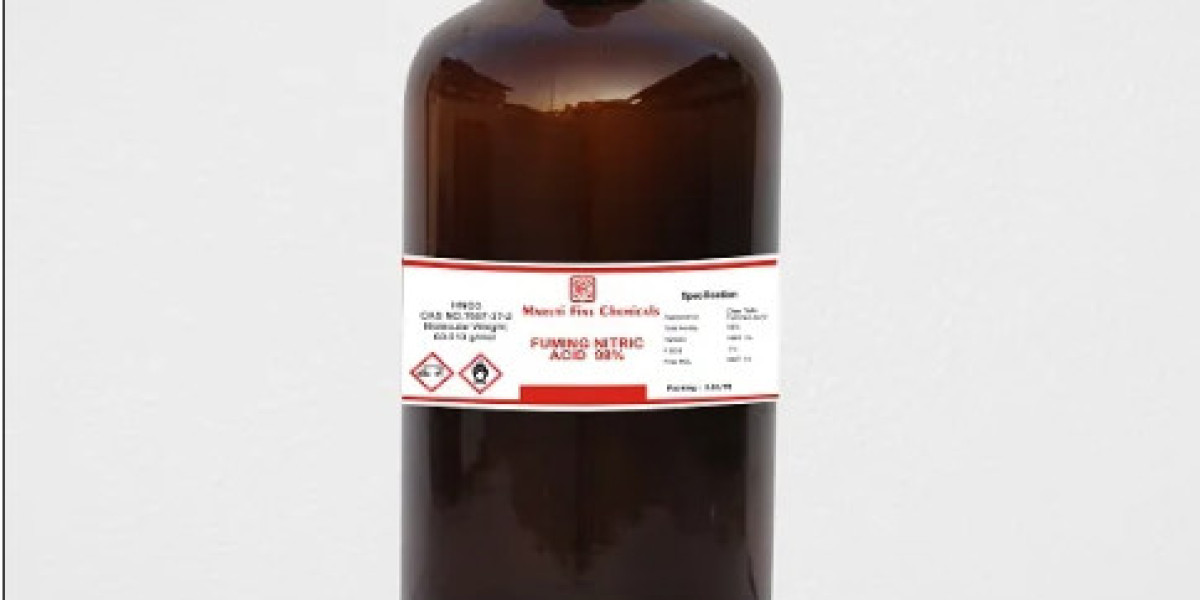
Fuming Nitric acid is associated with concentrated nitric acid that can release visible nitrogen oxide fumes. It is used in selected chemical processes where high oxidizing capability and concentration are required. However, its use involves more than simply choosing a high-strength acid. Process requirements, equipment compatibility, purity, storage, and workplace controls all need to be considered together.
The Role of Concentration in Industrial Nitric Acid
Nitric acid is available in different concentrations because industrial processes do not all require the same chemical strength. Diluted solutions may be used for general processing, while concentrated grades are selected for applications requiring stronger chemical activity.
Concentration can influence:
- Reaction rate
- Oxidizing behavior
- Fume formation
- Heat generation during reactions
- Equipment compatibility
- Storage requirements
- Handling procedures
This means that choosing a concentration should be part of process planning rather than a simple purchasing decision.
Why Fuming Nitric Acid Requires Special Attention
Fuming Nitric acid has a high concentration and can release nitrogen oxide fumes. These fumes can become noticeable when the acid is exposed to air or when unsuitable conditions are present.
The fuming behavior is one reason why ventilation and containment are important in facilities handling concentrated nitric acid. Operators should also be aware that temperature, contamination, and chemical contact can influence the intensity of fume formation.
In industrial environments, the objective is not merely to prevent visible fumes but to maintain controlled conditions throughout storage, transfer, and processing.
Concentration and Process Selection
One of the most common considerations when selecting nitric acid is whether the concentration matches the process.
For example, a reaction designed around a specific concentration may behave differently if a significantly stronger grade is introduced. Changes in concentration can alter reaction kinetics, heat release, material compatibility, and the quantity of acid required.
This is particularly relevant when using Nitric acid 98%. Such a highly concentrated grade should be selected only when the process specifications call for it.
Using a stronger chemical does not automatically mean better process performance. The appropriate grade is the one that meets the technical requirements of the particular application.
Where High-Concentration Nitric Acid Fits Into Industry
Highly concentrated nitric acid has applications across several areas of chemical and industrial processing.
Chemical Synthesis
Nitric acid can participate in chemical synthesis as an acidic and oxidizing reagent. The required concentration depends on the reaction chemistry and desired operating conditions.
Nitration Processes
Nitration involves introducing a nitro group into an organic molecule. Nitric acid can serve as a nitrating component in carefully controlled processes.
Because nitration reactions can be highly exothermic, industrial systems require appropriate temperature control, equipment design, and process monitoring.
Metal Surface Treatment
Nitric acid can be used for certain metal cleaning, pickling, and passivation applications. Its effect varies according to the metal, acid concentration, temperature, and exposure period.
Consequently, the correct process specification must be established before selecting a particular grade.
Chemical Intermediate Production
Nitric acid is also used in the manufacture of various nitrate compounds and other chemical intermediates. Different stages may require different concentrations.
Analytical Applications
Laboratories may use concentrated nitric acid for selected sample-preparation and digestion procedures. In such applications, purity can be as important as concentration because trace contaminants may affect analytical results.
What Does 98% Nitric Acid Mean?
Nitric acid 98% indicates a product containing approximately 98% nitric acid by weight. This represents an extremely concentrated grade and is substantially different from commonly used dilute solutions.
At this concentration, nitric acid has strong oxidizing and corrosive characteristics. It also requires carefully selected storage and transfer systems.
The 98% figure should therefore be considered a technical specification rather than simply an indication of chemical strength. Depending on the application, other characteristics such as impurity levels, appearance, packaging, stability, and Maruti Fine Chemicals’ product specifications may also be important.

Purity Can Matter as Much as Concentration
Two products having the same nominal concentration may not necessarily be identical for every industrial application. Trace impurities can influence chemical reactions, product quality, equipment performance, or analytical results.
Depending on the application, buyers and technical teams may examine specifications such as:
- Nitric acid concentration
- Water content
- Chloride levels
- Sulfate content
- Iron and other metallic impurities
- Appearance
- Packaging
- Batch consistency
For specialized industrial applications, these parameters should be reviewed against the process specification.
Equipment Selection Is an Important Part of the Process
The chemical itself is only one part of a nitric acid handling system. Tanks, pipes, valves, pumps, seals, transfer lines, and other components must also be considered.
Material compatibility can depend on:
- Acid concentration
- Operating temperature
- Contact time
- Pressure
- Chemical impurities
- Mechanical conditions
A material that performs adequately with diluted nitric acid may not necessarily be appropriate for a highly concentrated grade.
This is why equipment selection should be based on verified chemical compatibility information and the actual operating conditions.
Safe Transfer and Handling
Handling concentrated nitric acid requires controlled procedures from the moment the material enters a facility until it is consumed or transferred.
Personnel should receive suitable chemical-safety training and understand the hazards associated with corrosive and oxidizing substances.
Basic controls include:
- Appropriate personal protective equipment
- Suitable ventilation
- Compatible transfer equipment
- Clearly labelled containers
- Controlled transfer procedures
- Emergency-response arrangements
- Separation from incompatible chemicals
- Regular inspection of storage and transfer systems
For Nitric acid 98%, additional care is required because its concentration increases the consequences of incompatible contact and accidental exposure.
Storage Considerations
Storage conditions can affect the stability and safety of concentrated nitric acid. Containers should be compatible with the chemical and maintained in suitable conditions.
Storage areas should provide appropriate ventilation and segregation from combustible materials, organic substances, reducing agents, and other incompatible chemicals.
Containers should be inspected periodically for corrosion, damage, leakage, or deterioration. Labelling should remain clear so that personnel can identify the material and its concentration correctly.
Understanding Fume Formation
The term “fuming” can sometimes lead to the assumption that fumes are an unavoidable part of routine handling. In reality, visible fumes should be managed through appropriate engineering controls.
Fuming Nitric acid may release nitrogen oxide fumes due to its concentrated nature and interactions with atmospheric moisture. Temperature and contamination can also influence fume generation.
Proper ventilation and closed transfer systems can help reduce unnecessary exposure during industrial operations.
Frequently Asked Questions
What is Fuming Nitric acid mainly used for?
It is used in specialized chemical and industrial applications where highly concentrated nitric acid is required, including selected synthesis, nitration, metal-treatment, and chemical-processing operations.
Is Nitric acid 98% the same as ordinary concentrated nitric acid?
No. Although both are concentrated grades, a 98% product has a specific composition and significantly different handling requirements. The exact product specification should always be checked before use.
Why does concentrated nitric acid produce fumes?
Nitrogen oxides and interactions with atmospheric moisture can contribute to visible fumes. Temperature and contamination may also influence fume formation.
Does nitric acid concentration affect equipment selection?
Yes. Concentration, temperature, contact time, and other operating conditions can influence the compatibility of tanks, pipes, pumps, seals, and other components.
Can the strongest available nitric acid always be used?
No. The concentration should correspond to the process specification. A higher concentration can change reaction behavior and may create unnecessary safety or equipment challenges.
Conclusion
Fuming Nitric acid has an important role in specialized industrial chemistry, but its effective use depends on much more than its concentration. Reaction requirements, purity, equipment compatibility, fume control, storage conditions, and workplace procedures all influence how the chemical should be selected and handled.
Nitric acid 98% represents a highly concentrated grade intended for processes that specifically require such a concentration. Maruti Fine Chemicals provides nitric acid products for industrial requirements, with the appropriate grade selected according to process specifications and equipment compatibility.
visit here- https://marutifinechem.com/fuming-nitric-acid