
Selecting a pneumatic valve starts with understanding the job it must perform. Connection size matters, but so do the operating method, air conditions and volume of compressed air involved. Looking at these details together helps engineers choose components that suit the complete circuit.
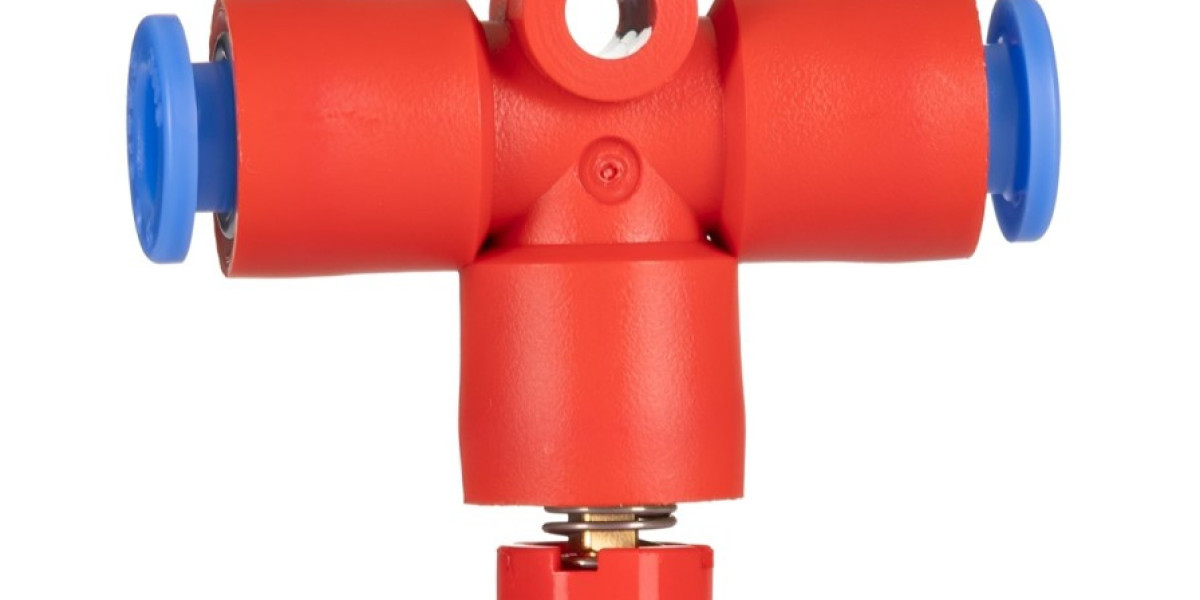
The SMC Residual Pressure Relief Valve, manufacturer part number KEA06, provides manual release of trapped air through a push button. Its one-touch connections accommodate tubing with a 6 mm outside diameter, making it an option for compatible pneumatic lines requiring a local residual-pressure release function.
For equipment builders and technical buyers, the useful question is where this particular function belongs in the system. A clear specification makes that decision easier.
What Function Does the SMC Residual Pressure Relief Valve Perform?
The SMC Residual Pressure Relief Valve releases residual pressure from an isolated system through manual button operation. Its operating pressure range is 0–1 MPa, equivalent to 0–10 bar. That range describes permissible operating conditions, rather than an automatic opening threshold.
This distinction is essential when selecting a valve. A circuit requiring automatic overpressure protection needs a component specifically designed for that duty.
When exploring Pneumatic Exhaust & Relief Valve Function Fittings, compare the operating principle as carefully as the connection dimensions. Similar descriptions can cover devices with different purposes.
Does a 6 mm Connection Describe the Exhaust Capacity?
The tubing dimension establishes physical compatibility. It does not, by itself, describe how quickly pressure will fall through the release path.
SMC’s catalogue lists a residual-pressure release effective area of 1.8 mm² for the KE series. The catalogue treats this separately from the effective area of the main flow passage.
For selection purposes, this means engineers should assess normal airflow and residual venting as separate requirements. A component may connect correctly to the tubing while still needing evaluation against the desired pressure-release behaviour.
Use the manufacturer’s flow information and the actual circuit arrangement when assessing suitability. Tube diameter alone is an incomplete selection method.
Why Does the Volume of Trapped Air Matter?
The amount of air retained in a branch influences the venting task. A short connection to a small chamber presents a different requirement from a larger connected volume.
Consider the entire section that communicates with the release point. Include actuator chambers, connecting lines and any additional storage volume shown on the pneumatic drawing.
Systems incorporating Air Reservoirs require particular attention to stored air and the specified exhaust arrangement. Selection should establish whether the intended release device has adequate capacity for that volume.
Define acceptable pressure-release performance during design review. Verify it under representative conditions rather than assuming every installation will behave identically.
How Does Air Quality Affect Component Selection?
Air quality forms part of the valve’s operating environment. Moisture, particles and unsuitable contaminants can interfere with pneumatic equipment.
SMC calls for clean compressed air and upstream filtration of 5 μm or finer. Its operating guidance also identifies moisture removal as necessary where excessive condensate could affect operation.
Appropriately selected Pneumatic Air Dryers can support the required air condition as part of the wider preparation system. Dryer selection should account for airflow, inlet conditions and the moisture level the application requires.
For buyers, this is a useful reminder to review the air supply alongside the valve. Replacing a component will not resolve an unsuitable supply condition.
What Happens When Air Lines Pass Through a Panel?
A cabinet or machine partition can introduce additional connection points between the air supply and the working circuit. Plan these transitions so tubing follows a clear route and remains protected from sharp edges and unnecessary strain.
Pneumatic Bulkhead Tube-to-Tube Adaptors provide connection options for suitable panel arrangements. Check their tube size, mounting requirements and pressure rating independently of the SMC Residual Pressure Relief Valve.
Treat every fitting as part of the complete assembly. Consistent identification and an accurate pneumatic drawing make it easier to understand which components belong to each branch, particularly when equipment contains several similar air lines.
How Can Pressure Indication Support Evaluation?
Pressure indication helps engineers observe what happens when a circuit is operated or vented. Measurements can reveal whether pressure falls as expected and whether a particular section remains supplied.
Suitable Pneumatic Pressure Sensors can provide electrical signals for compatible monitoring equipment. Select the measuring range, output and connection around the intended application.
Place the measurement point where it represents the section being assessed. A reading on one side of a closed valve may not describe conditions on the other side.
For maintenance, pressure indication must form part of the machine’s established verification procedure. Isolation and control of other stored energy remain necessary.
Which Environmental Details Deserve Attention?
The SMC Residual Pressure Relief Valve has a published ambient and fluid temperature range of −5°C to +60°C, with freezing excluded. Assess both the surrounding environment and the air reaching the component.
A cabinet near heat-producing equipment may experience different conditions from the room around it. Likewise, cold locations require attention to moisture and the possibility of freezing.
Record expected conditions before purchasing. Where the application involves unusual fluids, chemical exposure or conditions outside the published specification, obtain confirmation from SMC before selecting the valve.
What Should a Complete Purchasing Brief Include?
A useful purchasing brief connects the product to its intended duty. Include:
The exact product name: SMC Residual Pressure Relief Valve
The requirement for manual residual-pressure release
The specified 6 mm tube outside diameter
Expected operating pressure and temperature
The air volume associated with the release point
Air preparation requirements
The method for evaluating pressure-release performance
The approved manufacturer part number and circuit location
These details help purchasing and engineering teams work from the same requirements.
Choose the SMC Residual Pressure Relief Valve at Enrgtech when its manual operation, connections and published limits match the application. Checking the whole pneumatic arrangement gives the product a clearly defined role and makes the selection easier to justify.