
Strong leadership is often measured by what people can see: the decisions made, the goals achieved, the teams developed, and the results delivered.
But some of the most important influences on those outcomes are much harder to see.
Organizational incentives, governance structures, economic conditions, institutional relationships, and systems of accountability can shape decisions long before those decisions produce visible results. Leaders who understand these underlying forces are better positioned to recognize opportunities, anticipate challenges, and make more informed choices.
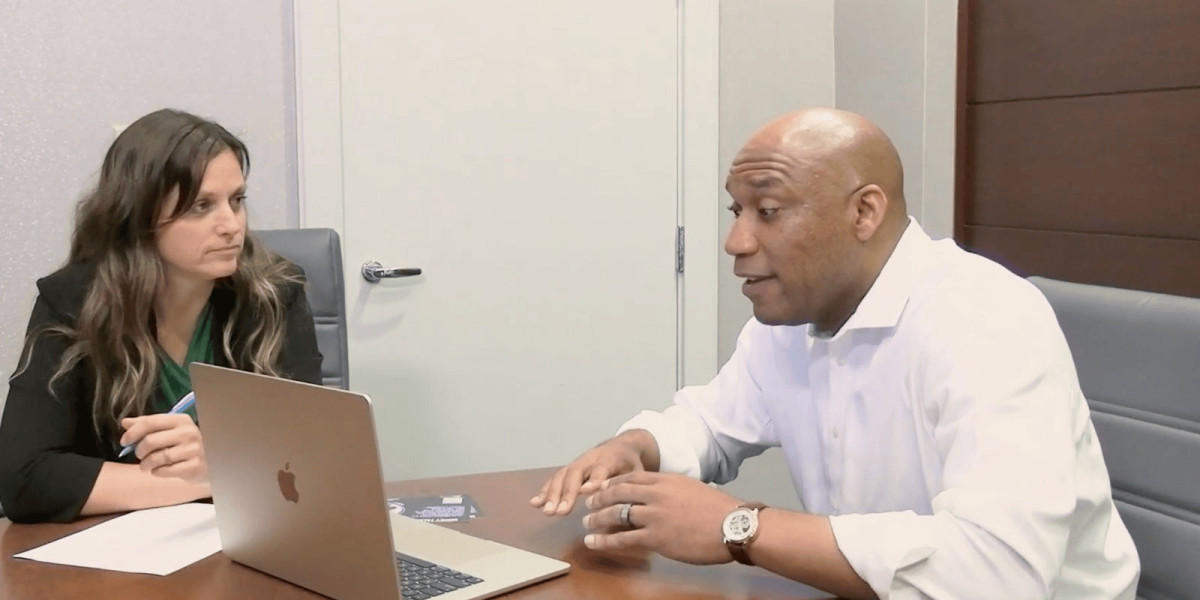
This is the foundation of Antomius Wise's approach to keynote speaking and executive education.
As an institutional systems speaker and executive education strategist, Antomius works with leaders and organizations that want to look beyond conventional leadership conversations. His programs bring together leadership, governance, economic structure, philanthropy, and high-performance principles to help audiences develop a broader understanding of how institutions actually work.
The purpose is not simply to inform an audience.
It is to give people a different way to think.
When the Obvious Explanation Isn't Enough
A company can have talented people and still struggle.
A foundation can have significant resources and still fail to create lasting impact.
A leadership team can have a clear strategy and still encounter resistance.
In many cases, the problem is not a lack of effort or intelligence. The issue may exist within the structure surrounding the people making the decisions.
Who has authority? What behaviors are being rewarded? Where does accountability sit? Which incentives are driving decisions? How are resources distributed? What economic or institutional forces are influencing the organization?
These questions can reveal a very different picture.
Antomius' work encourages leaders to examine these deeper layers rather than treating every challenge as an isolated problem.
That systems-oriented perspective is particularly valuable for organizations operating in environments where decisions have consequences beyond the immediate moment.
Executive Education That Starts With How Leaders Think
Information is easy to consume.
Changing perspective is considerably harder.
Antomius' keynotes, workshops, and executive education programs are designed around that distinction. Rather than delivering a one-size-fits-all presentation, each engagement is developed for the audience and the environment in which the conversation takes place.
A main-stage keynote can introduce a powerful framework to a large audience.
A workshop can create space for deeper discussion and application.
A multi-session executive education program can give leadership teams the opportunity to examine complex issues over time.
In each format, the emphasis remains on practical intellectual engagement — giving leaders ideas they can take into their organizations and use when making consequential decisions.
Four Programs. Four Ways to Examine Leadership.
Antomius offers several signature programs that approach leadership and institutional performance from different angles.
Make the Invisible Visible
Every organization has forces operating beneath its visible results.
Make the Invisible Visible explores how incentives, structure, governance, and economic systems influence value creation, institutional growth, and long-term outcomes.
The keynote encourages leaders to move beyond surface-level analysis and examine the mechanisms that shape organizational behavior.
For executives, this can provide a useful framework for understanding why an organization performs the way it does — and where structural changes may create greater value.
Strategic Philanthropy & Economic Impact
The conversation around philanthropy often begins with a simple question: how much can we give?
A more strategic question is what happens next.
Strategic Philanthropy & Economic Impact examines philanthropy through the broader lenses of governance, economic infrastructure, institutional development, and sustainable value.
The program is designed for leaders who want to understand philanthropy not simply as charitable activity, but as a potential force within larger economic and institutional systems.
It offers philanthropic leaders, foundations, and advisor networks a broader framework for considering both immediate outcomes and lasting impact.
Leadership Inside Complex Systems
There are environments where leadership cannot be reduced to a checklist.
When multiple stakeholders, competing incentives, uncertainty, and institutional pressures are involved, leaders need more than conventional management techniques.
Leadership Inside Complex Systems focuses on decision-making, accountability, discipline, and structural awareness in precisely those environments.
The program helps leaders consider how complexity affects their choices and why understanding the surrounding system is essential to leading effectively within it.
From the Field to the Secret Service
Leadership lessons can come from unexpected places.
From the Field to the Secret Service draws on Antomius Wise's journey from professional football to the U.S. Secret Service, connecting two demanding environments where preparation, discipline, adaptability, and performance matter.
The keynote explores what these experiences reveal about performing under pressure, preparing for uncertainty, maintaining purpose, and responding when circumstances change.
It is both a personal journey and a broader conversation about the characteristics required to perform at a high level.
From Individual Performance to Institutional Performance
One of the most important distinctions in leadership is the difference between performing well individually and building systems that perform well collectively.
An exceptional executive may make excellent decisions.
An exceptional institution creates an environment where better decisions can consistently be made.
That requires attention to structure.
It requires understanding governance, incentives, accountability, economic conditions, and organizational design. It also requires leaders to recognize that today's decisions can influence an institution's ability to create value years into the future.
This broader perspective is central to Antomius' executive education work.
His experience across professional athletics, federal service, business education, and institutional strategy informs conversations about what it takes to perform under pressure while also thinking beyond the immediate objective.
Where These Conversations Matter Most
The value of systems-oriented leadership education is especially apparent in rooms where decisions affect people, capital, organizations, and communities.
Antomius' programs are suited for:
- Executive leadership teams navigating strategic and organizational challenges
- Wealth advisors and trust networks seeking substantive educational experiences for their communities
- Chambers and civic leadership circles exploring institutional and economic development
- Philanthropic networks and foundations focused on governance and long-term impact
- High-income founders and entrepreneurs building organizations designed to grow and endure
- Universities and academic convenings looking for meaningful leadership and institutional discussions
- Financial services and insurance firms operating within complex economic and regulatory environments
- Private executive rooms where leaders can engage in focused, high-level conversations
The format can be adapted to the setting, but the underlying philosophy remains consistent: the conversation should be relevant, substantive, and capable of changing how participants approach their work.
What Happens When the Framework Changes?
Sometimes better leadership does not begin with a new strategy.
It begins with seeing an existing situation differently.
A leader may discover that a performance problem is actually an incentive problem.
An executive team may realize that a governance structure is creating unintended consequences.
A philanthropic organization may recognize that its greatest opportunity lies beyond traditional giving.
A founder may begin thinking less about building a successful company and more about building an institution capable of lasting.
These shifts in perspective can influence decisions long after a keynote or workshop has ended.
That is the real purpose of executive education.
Creating Conversations That Continue After the Event
A meaningful speaking engagement should not disappear when the presentation ends.
The strongest programs give participants ideas to discuss, questions to explore, and frameworks to apply within their own environments.
Antomius Wise's work is designed around that kind of lasting engagement.
Whether the setting is a university, executive conference, leadership retreat, philanthropic gathering, advisor network, or private boardroom, the objective is to create a conversation that respects the intelligence of the audience while challenging them to examine familiar problems from a different angle.
Bring a Different Perspective Into the Room
Organizations facing complex challenges do not always need more information.
They may need a better framework for understanding the information they already have.
Antomius Wise brings that perspective through keynotes, workshops, and executive education programs focused on leadership, institutional systems, governance, strategic philanthropy, economic structure, and high performance.
Every engagement is designed around the room it serves — because the most valuable leadership conversations are not necessarily the loudest or most motivational.
They are the ones that change what people notice.
They change the questions leaders ask.
And ultimately, they can change the decisions those leaders make.