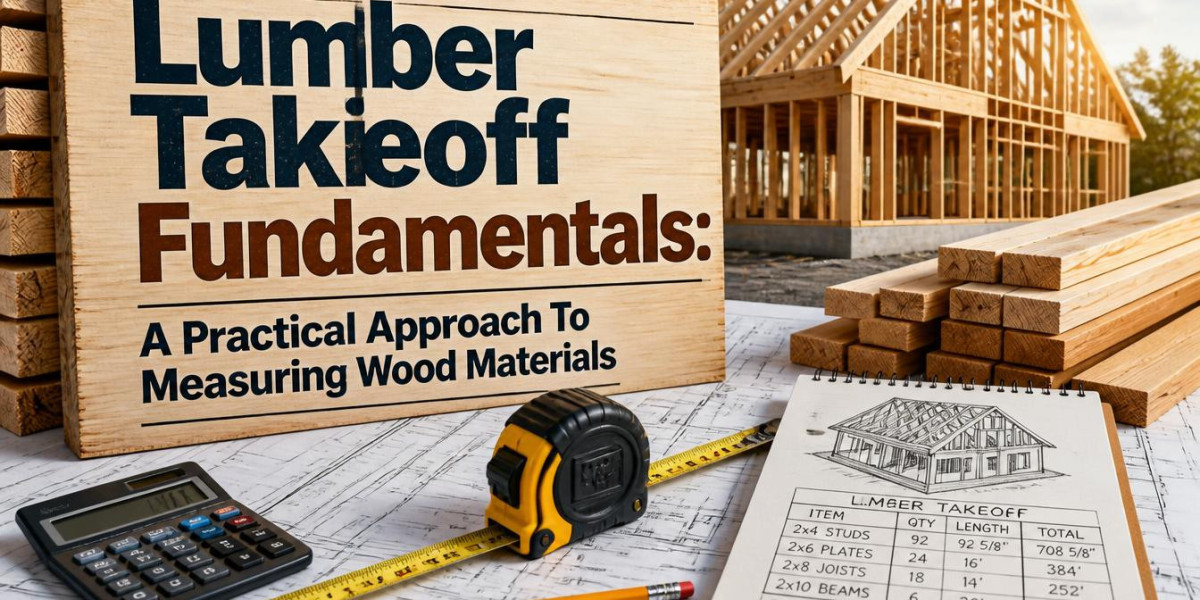

A lumber takeoff counts all the wood a project needs based on the drawings. An accurate takeoff helps make sure the right amount of lumber is ordered. A poor takeoff can leave you with extra materials or cause delays.
Framing made up 16.6% of total construction costs according to NAHB's 2024 Cost of Construction Survey. This is why many builders use dedicated lumber takeoff services instead of doing the work themselves. SMA Estimating LLC offers the best services, saving their clients time and money.
What Actually Goes Into The Lumber Takeoff?
A lumber takeoff includes all the structural wood and the smaller items that are easy to miss. This consists of plates, studs, headers, joists, rafters, sheathing, blocking, bracing, and hardware.
The takeoff should also list the wood types, grade, and treatment because different materials have different uses and prices. A PT sill plate and a #2 SPF are not the same item, so they should be treated differently.
How To Perform A Lumber Takeoff From Construction Drawings
A reliable lumber takeoff starts with a systematic review of the entire drawing set. Do not start by counting studs on the floor plan only. Begin with the architectural and structural drawings to know the following:
Building dimensions
Framing layouts
Wall heights
Openings
Roof design
Structural requirements
Follow these steps:
1. Review the plans and specifications
Check floor plans, elevations, sections, structural details, and notes for framing requirements.
2. Measure the quantities
Calculate linear footage, piece counts, or panel quantities based on the applicable material.
3. Account for openings and structural details
Deduct doors and windows where appropriate, but add headers, king studs, jack studs, and other framing required around openings.
4. Add a reasonable waste allowance
Apply waste based on the material, framing complexity, cutting requirements, and expected offcuts rather than adding an arbitrary percentage.
4. Cross-check the quantities
Compare the takeoff against the drawings, framing plans, elevations, and structural details before finalizing the estimate.
This process helps prevent common lumber estimating errors, such as:
Missing short walls
Overlooking blocking
Double-counting framing
Using the wrong lumber specification
Why Does Not A 2x4 Measure 2 Inches By 4 Inches?
Lumber sizes follow voluntary product standard PS 20, the American Softwood Lumber Standard maintained through NIST.
Nominal | Actual (dry, dressed) |
2x4 | 1½" × 3½" |
2x6 | 1½" × 5½" |
2x8 | 1½" × 7¼" |
2x10 | 1½" × 9¼" |
2x12 | 1½" × 11¼" |
The key point is simple: you build with the actual lumber size, but you buy it by the nominal size. Accurate wood material measurement requires knowing both sizes.
How Do You Convert A Count Into Board Feet?
The board foot calculation is simple:
(nominal thickness in inches × nominal width in inches × length in feet) ÷ 12
For instance:
10-foot 2x6 gives 10 board feet: (2 × 6 × 10) ÷ 12 = 10.
Use the nominal size in the calculation, not the actual size. Using 1.5×5.5 rather than 2x6 would understate the board footage.
Plywood and OSB are different. They are counted by the panel, not by board feet. Keep them as a separate item in the lumber quantity estimation.
What Waste Factor Is Honest?
Waste is a real cost. Offcuts, damaged pieces, and wrong cuts all cost money. You pay for the material when it is bought and when it is disposed of. Planning cut lists around available stock lengths can reduce waste and help lower material costs. Lumber takeoff fundamentals are not just about counting materials. They also consider how the lumber will be cut and used.
Why Does The Pricing Date Matter As Much As The Quantity?
The same quantity can cost different amounts only a few weeks later. Framing lumber was $529.75 per 1,000 board feet on August 21, 2026, up 5.3% from a year earlier, according to Madison’s index reported by NAHB.
Trade policy can also affect lumber prices. Canadian softwood lumber has faced additional U.S. duties, adding another cost factor that should be considered when pricing a project.
The Bottom Line
A good lumber takeoff process follows a few simple steps. Count from the drawings, use the correct nominal sizes, include expected waste, and record the price date. SMA Estimating LLC follows this process to give builders a clear lumber quantity and cost estimate they can use for ordering and construction.