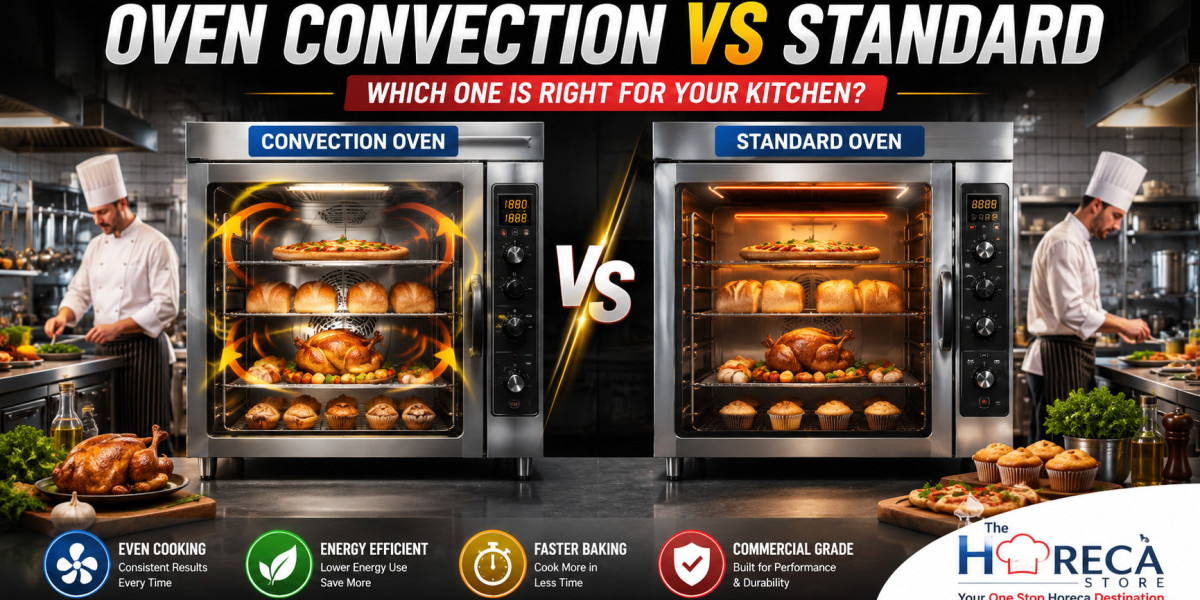

Choosing the right oven is one of the most important decisions for any restaurant, bakery, café, or commercial kitchen. The oven you select directly affects cooking speed, food quality, energy efficiency, and overall kitchen performance. When comparing different oven options, one of the most common questions is “oven convection vs standard – which one is better?”
Both convection ovens and standard ovens have their own advantages and are suitable for different cooking needs. Understanding the differences between these two oven types can help restaurant owners, chefs, and foodservice professionals choose the best equipment for their operations.
What Is a Standard Oven?
A standard oven, also known as a conventional oven, is a traditional cooking appliance that uses heating elements to generate heat inside the cooking chamber. The heat naturally rises and circulates around the food without the assistance of a fan.
Standard ovens have been used in commercial kitchens for many years because they are simple, reliable, and effective for many cooking applications.
In a standard oven:
Heat comes from heating elements located at the top or bottom.
Hot air moves naturally inside the oven.
Cooking depends mainly on direct heat transfer.
Food is cooked without forced air circulation.
These ovens are commonly used for:
Baking cakes
Roasting meats
Cooking casseroles
Preparing traditional recipes
General restaurant cooking
What Is a Convection Oven?
A convection oven is an advanced oven system that uses a built-in fan to circulate hot air throughout the cooking chamber. This forced air movement creates a more even temperature distribution and allows food to cook faster and more consistently.
The fan continuously moves hot air around the food, helping heat reach all sides of the product.
Convection ovens are popular in restaurants, bakeries, and commercial kitchens because they provide:
Faster cooking times
Even heat distribution
Better browning
Improved energy efficiency
Higher production capacity
They are commonly used for:
Baking pastries
Roasting vegetables
Cooking meats
Preparing pizzas
Baking bread
High-volume food production
Oven Convection vs Standard: Key Differences
Understanding the differences between convection ovens and standard ovens can help businesses choose the right option.
Cooking Method
The biggest difference between these ovens is how heat moves inside the cooking chamber.
Standard Oven
A standard oven relies on natural heat circulation. Hot air rises while cooler air moves downward, creating natural temperature zones.
This can sometimes cause:
Uneven cooking
Hot and cold spots
Longer cooking times
Convection Oven
A convection oven uses a fan to distribute heat evenly throughout the chamber.
This results in:
More consistent temperatures
Faster cooking
Better food quality
More even browning
Cooking Speed
Cooking speed is an important factor in commercial kitchens.
Standard Oven
Traditional ovens usually require longer cooking times because heat moves naturally.
For busy restaurants, this may reduce production efficiency.
Convection Oven
Convection ovens cook food faster because circulating air transfers heat more efficiently.
Advantages include:
Reduced cooking time
Faster order preparation
Increased kitchen productivity
Many convection ovens can cook food approximately faster than standard ovens, depending on the recipe and temperature settings.
Food Quality and Results
The type of oven you use can affect the final quality of your food.
Standard Oven Results
Standard ovens are excellent for foods that require gentle, traditional cooking methods.
They work well for:
Cakes
Bread recipes
Slow roasting
Moist dishes
Convection Oven Results
Convection ovens are ideal for achieving:
Crispy textures
Even browning
Better roasting results
Consistent baking
For restaurants that need reliable results across large batches, convection ovens are often preferred.
Energy Efficiency
Energy consumption is an important consideration for commercial kitchens.
Standard Oven Efficiency
Standard ovens may use more energy because they typically require longer cooking times.
Convection Oven Efficiency
Convection ovens can reduce energy usage because they cook food faster and maintain more consistent temperatures.
Benefits include:
Lower operating costs
Reduced cooking time
Improved productivity
For businesses focused on efficiency, convection ovens can provide long-term savings.
Capacity and Commercial Use
Both oven types are available in different sizes, but convection ovens are often preferred for commercial environments.
Restaurants and bakeries choose convection ovens because they can handle:
Multiple trays
Large food batches
Continuous production
High customer demand
Standard ovens may be better suited for smaller kitchens or businesses with lower cooking volumes.
Maintenance and Operation
Standard Oven Maintenance
Standard ovens are generally simple to operate and maintain.
Maintenance usually includes:
Cleaning the interior
Checking heating elements
Removing food residue
Convection Oven Maintenance
Convection ovens require additional attention because of the fan system.
Maintenance includes:
Cleaning the fan area
Checking airflow systems
Regular inspection of moving parts
However, modern commercial convection ovens are designed for easy maintenance and long-term reliability.
Which Oven Is Better for Restaurants?
The answer depends on your kitchen requirements.
A standard oven may be the right choice if you:
Prepare traditional recipes
Need simple operation
Have lower cooking demands
Focus on slow cooking or baking
A convection oven may be better if you:
Operate a busy restaurant
Need faster cooking
Prepare large food quantities
Require consistent results
Want better energy efficiency
Many professional kitchens choose convection ovens because they provide greater flexibility and productivity.
Choosing Between a Convection Oven and Standard Oven
Before making a decision, consider:
Menu Type
Think about the foods you prepare most often. Bakeries, cafés, and restaurants may have different requirements.
Cooking Volume
High-volume kitchens usually benefit from convection technology.
Budget
Standard ovens may have a lower initial cost, while convection ovens can provide better long-term efficiency.
Kitchen Space
Consider available installation space and workflow requirements.
Final Thoughts
When comparing oven convection vs standard, both options have unique benefits. Standard ovens remain a reliable choice for traditional cooking methods, while convection ovens provide faster cooking, better heat distribution, and improved efficiency.
For commercial restaurants, bakeries, and professional kitchens, convection ovens are often the preferred option because they help maintain consistent food quality while increasing productivity. However, the best choice depends on your menu, cooking volume, and operational needs.
The Horeca Store understanding the differences between convection and standard ovens allows foodservice businesses to invest in the right equipment and create a more efficient, successful kitchen environment.